Questions & answers
Everything people ask before their first night.
Prices, weather, clothing, children and what the telescope really shows. Anything missing? Just ask.
Price and booking
- How much does a stargazing evening cost?
- £50 per adult and £30 for children under 16, for the whole evening. The minimum is 3 people; fewer of you are welcome and simply book 3 places. Schools and other groups get additional discounts.
- Do I pay in advance?
- No. Nothing is paid in advance: the final decision is made on the day, a few hours before the start, once we know what the sky will do.
- What happens if it is cloudy?
- We decide together on the day. If the forecast is poor we move to another night — there is nothing to look at under a cloudy sky. In about 80% of cases we get what we planned.
- Can you come to our garden or our event?
- Yes — birthdays, weddings, garden parties and venues across Surrey, Berkshire, Hampshire and West Sussex. Same prices, plus £50 travel within Surrey or £100 for the other counties. No mains power is needed. If the sky closes in after I have arrived, only the travel charge is due — I watch the forecast until the moment I leave to avoid that. Stargazing at your place →
- Can I give an evening as a present?
- Yes. Tell us who it is for; the date is agreed later with them, on a night the weather allows. Gifts, birthdays & groups →
The evening
- How long does it last?
- 3 hours as standard, and longer when the sky is generous, at no extra charge.
- Where do we meet?
- At Newlands Corner Car Park, Drove Road, Albury, Guildford, Surrey GU4 8SE, up on the North Downs about ten minutes east of Guildford. Parking is free in the evening. How far is it from your town? →
- What time does it start?
- Around dusk, so that we set up while there is still a little light. That means early evening in winter and late in summer — in June it is not dark until after 10:30 pm. We agree the time when we fix the date.
- What should I wear?
- Warmer than you think. Even after a warm day it gets cold once you stand still under a clear sky. A hat that covers your ears, a scarf, warm layers — and a flask of hot tea if you can.
- Is it suitable for complete beginners?
- That is who it is for. No knowledge or equipment needed: I find the objects, explain what you are looking at and show you how to find a few things yourself.
- Can children come?
- Yes, there is no minimum age — as long as the child can make sense of what they see. Children under 16 pay £30. The Moon and Saturn are favourites; in winter it is dark early enough even for younger ones. Small children need something to stand on to reach the eyepiece: a sturdy step or chair (at Newlands Corner, just tell me in advance).
- Can I take photos?
- You will see how astrophotographs are made on the night. A phone held carefully to the eyepiece can often catch the Moon.
The sky
- What can you see through the telescope?
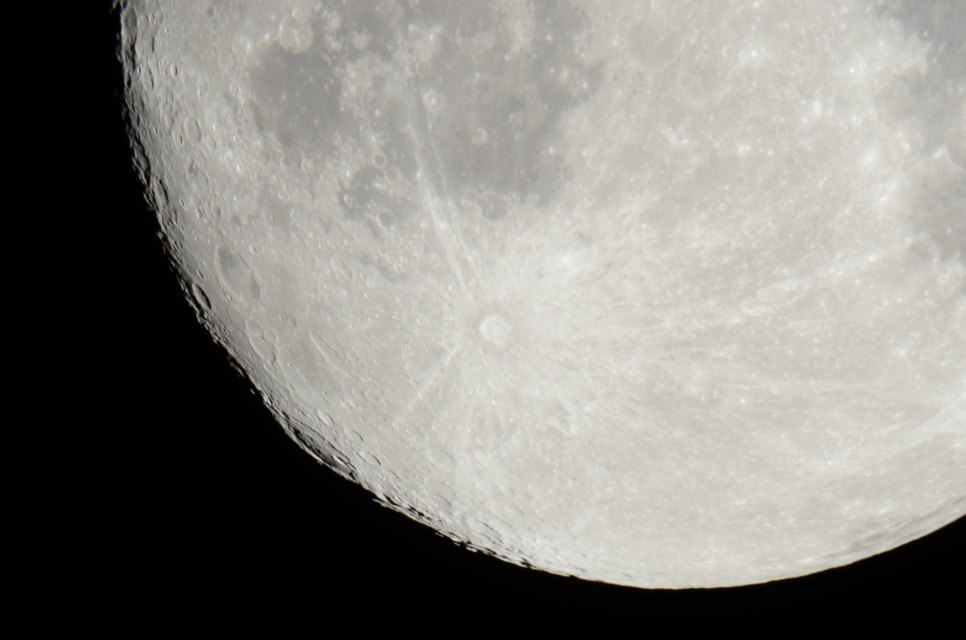
- Mostly the Moon and the planets — craters, Saturn's rings, Jupiter's belts and moons — plus star clusters, double stars and the brighter nebulae and galaxies. Galaxies and nebulae are faint grey glows to the eye, not the colourful photographs. Saturn, Jupiter & the Moon →
- Which planets are visible tonight?
- It changes through the year. The sky tonight page works out the Moon, the planets and the dark hours for this evening over Surrey. The sky tonight →
- Can you see the Milky Way in Surrey?
- On a clear night without the Moon, away from street lights — on the North Downs, for example — yes, as a faint band across the sky, best in late summer and autumn.
- When is the best time of year for stargazing?
- Autumn and winter give long dark evenings (dress warmly); summer nights are short and light but mild. The planets follow their own calendar, and the week around the new Moon is best for faint objects.
- How is this different from an observatory open evening?
- It is private: just your group, on a date you choose with the weather, with time at the eyepiece rather than a queue, and the option of having the telescope come to your own garden.
- What telescope do you use?
- A Meade LX90 12-inch Schmidt-Cassegrain on a tracking mount: big enough to show real detail on the planets, and it keeps the object in view while you look.
Still curious?
Ask me directly.
Enquire / Book the evening
or call / text +44 7404 933156 Alex