Moon & planets · Surrey
Saturn, Jupiter and the Moon through a telescope.
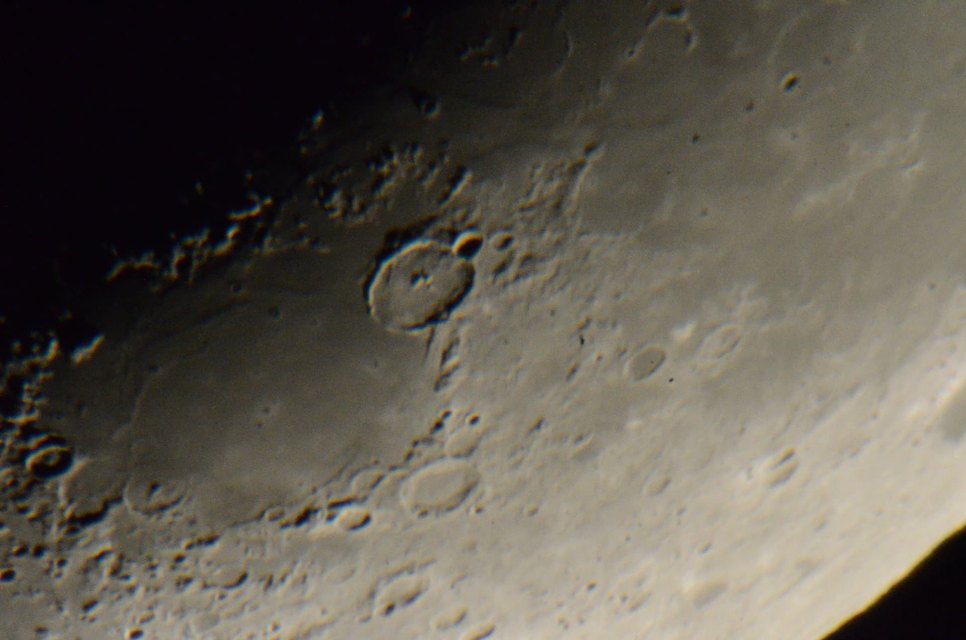
Saturn's rings, Jupiter's moons and the craters of the Moon are the views people remember for years. The photos below were taken through the same 12-inch telescope; live, the planets look smaller and shimmer a little in the moving air — but they are really there, in real time, in front of your eye.
Saturn
The rings, live.
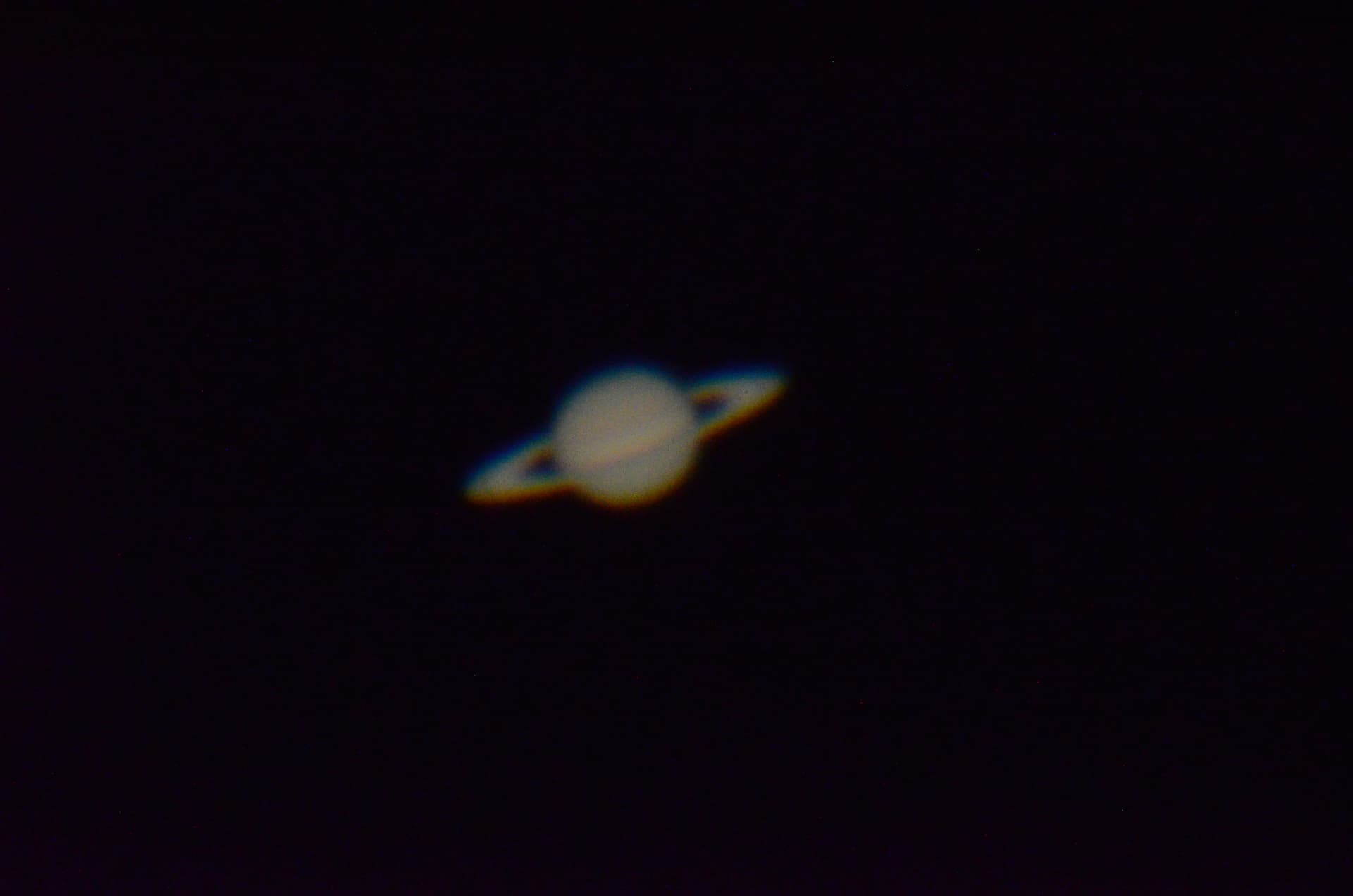
Yes, you can see Saturn's rings — clearly separated from the globe, with a shadow where the planet blocks the sunlight. Its largest moon, Titan, sits nearby as a small star; on a good night two or three more moons join it.
The rings tilt towards and away from us over a 15-year cycle. In 2025 they were almost edge-on; they are now slowly opening again, which makes every year a little different.
Saturn is best for a few months either side of its opposition, when it is closest to us and up all night.
Jupiter
Belts, storms and four moons.
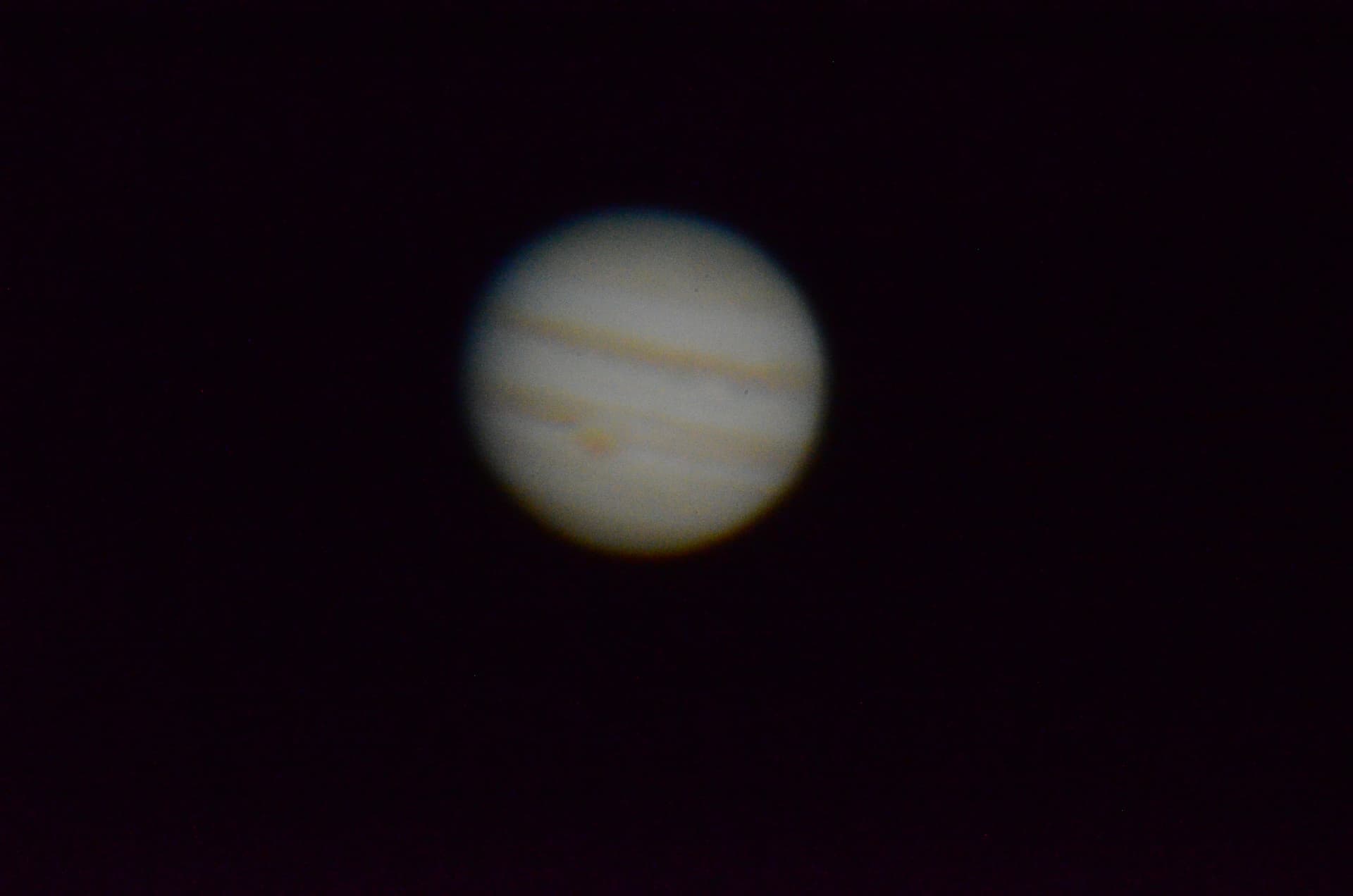
Jupiter is the largest planet, and in a 12-inch telescope it shows dark cloud belts across a bright disc. Beside it, in a line, are Io, Europa, Ganymede and Callisto — the moons Galileo found in 1610. They shift visibly over an evening; sometimes one passes in front of the planet and casts a tiny black shadow on the clouds.
On a steady night the Great Red Spot can show as a pale salmon oval — when it is on our side of the planet, which turns once every ten hours.
The Moon
Mountains, craters and long shadows.
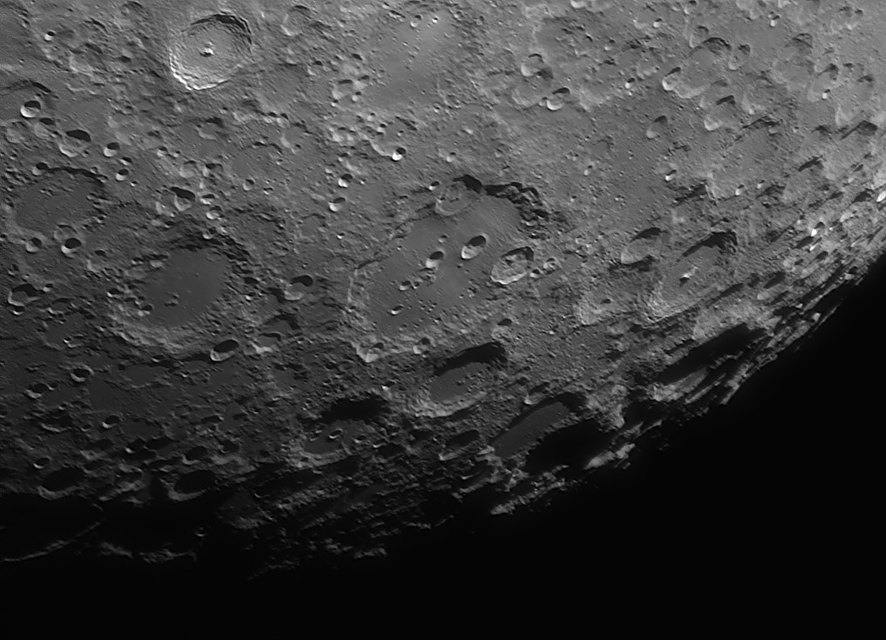
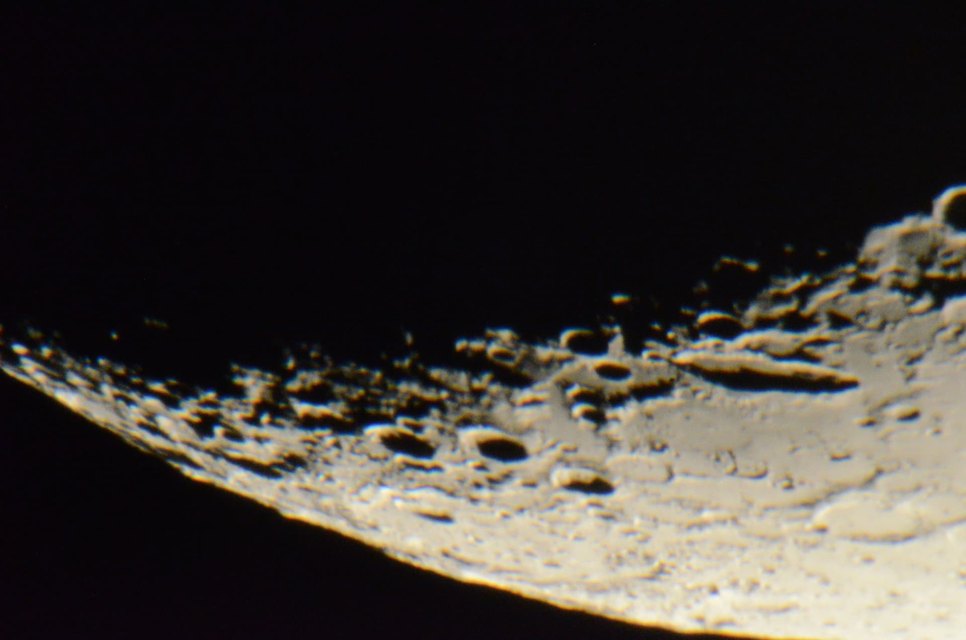
The Moon is the most spectacular sight in any telescope and the easiest. The best views are along the terminator, the line between lunar day and night, where crater walls throw long shadows and mountain peaks catch the sunrise. Come back an hour later and the light has already changed.
A part-lit Moon is better than a full one: at full Moon the light falls straight down, the shadows disappear and the surface looks flat (and very bright).
Tonight
Up this evening over Surrey.
Saturn
Up from 7:50 pm until after 1 am; highest in our evening around 12:50 am, 41° above the S horizon.
In the telescope: the rings, standing clear of the globe, and its largest moon Titan.
Uranustelescope only
Up from 9:40 pm until after 1 am; highest in our evening around 12:50 am, 40° above the ESE horizon.
In the telescope: a tiny pale blue-green disc, about 2.9 billion km away.
Neptunetelescope only
Up from 7:30 pm until after 1 am; highest in our evening around 12:10 am, 39° above the S horizon.
In the telescope: a faint blue star-like point at the edge of the solar system.
Monday, 5 October 2026: the Moon is a waning crescent, 26% lit. More on the sky tonight page.
Honest expectations
And the galaxies?
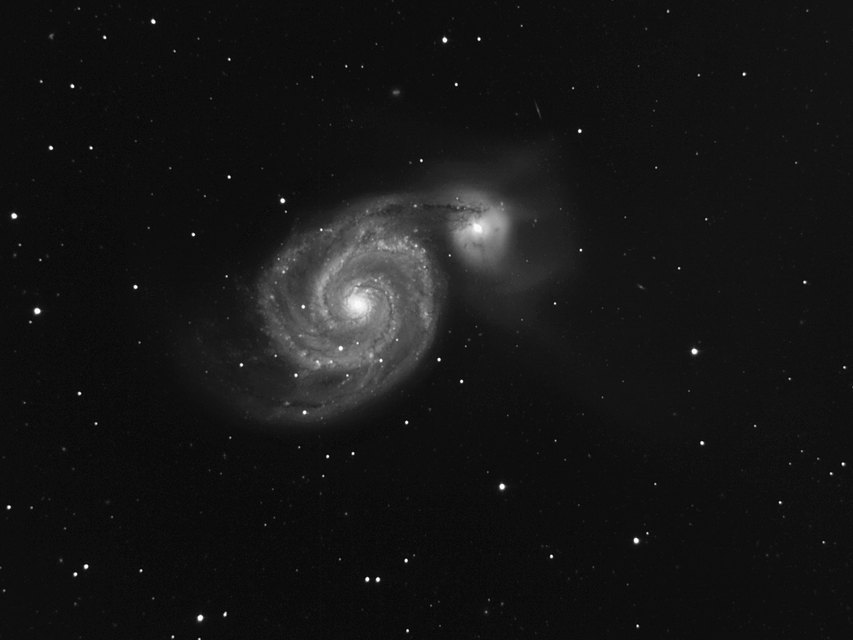
Galaxies and nebulae are real and you will see some — but through any telescope they are faint grey glows, not the colourful pictures in books. Those are long-exposure photographs: a camera collects light for minutes or hours, the eye cannot.
On the evening I can show you how such photographs are made. And the planets and the Moon need no exposure at all: they look wonderful live.
Questions
Can you really see Saturn's rings through a telescope?
Yes. Even a small telescope shows them; through a 12-inch telescope the rings stand clearly apart from the planet, with its largest moon Titan nearby. It is the view most guests remember.
What does Jupiter look like through a telescope?
A bright disc crossed by two or more dark cloud belts, with up to four large moons in a line beside it. The moons move visibly from hour to hour; on a steady night the Great Red Spot or a moon's shadow can show.
When is the best time to look at the Moon?
When it is part-lit — from crescent to a few days past first quarter, or the same in reverse. Along the line between lunar day and night the shadows are long and the craters stand out. The full Moon is brilliant but looks flat.
Do galaxies and nebulae look like the photographs?
No. Through any telescope they are faint grey glows; the colourful pictures are long-exposure photographs. Seeing the real light of a galaxy millions of light-years away is still remarkable — just different.
See them yourself
A private evening at the eyepiece.
Small groups, a 12-inch telescope and someone beside you to show you where to look — at Newlands Corner near Guildford, or at your own place.
or call / text +44 7404 933156 Alex
Which planets are up changes through the year, so nothing is promised in advance.